
What is your house made of, and what does it release?
Volatile organic compounds, or VOCs, are carbon-based chemicals that evaporate at room temperature. Glues, finishes and boards give them off into the air indoors, most of all when they are new.
New and freshly renovated buildings average more than ten times the organic vapour of older houses.
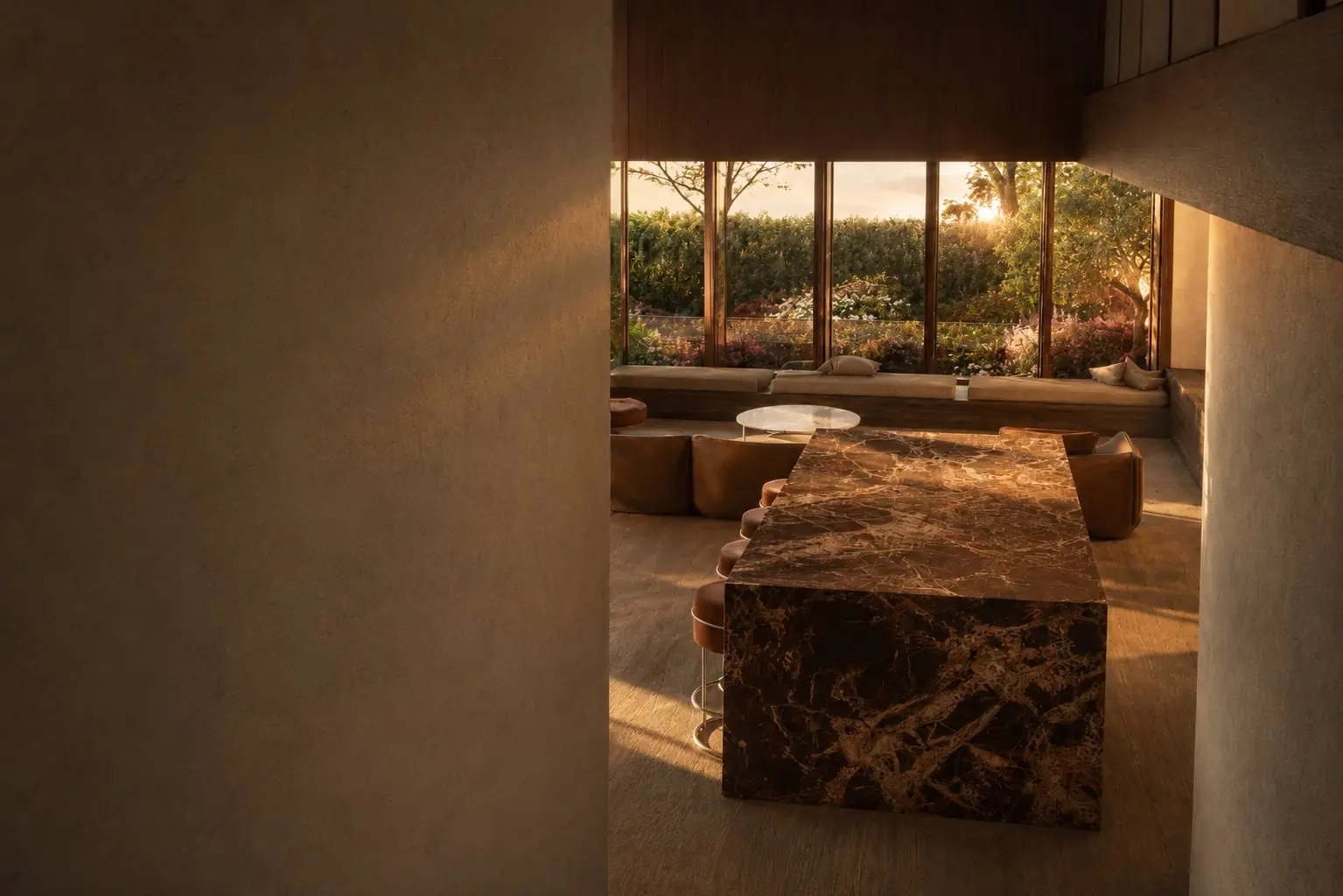
Some materials release ten thousand times more than others.
- 1 · timber floorfloor adhesivefirst 10 hours220mg/m²·h · under 5 from hour 10 to 100
- conventional
- glued down, lacquered on site
- considered
- low-emission glue, waterborne finish
- best available
- fixed, not glued; finished off site
- floor waxfirst 10 hours80
- 2 · stone islandsilicone caulkfirst 10 hours13mg/m²·h · under 2 from hour 10 to 100
- conventional
- long silicone joints, sealed on site
- considered
- low-emission sealant, fewer joints
- best available
- joints designed out, sealer only if needed
- wood stainfirst 10 hours10
- polyurethane wood finishfirst 10 hours9
- 3 · window seatparticleboard, newformaldehyde2mg/m²·h · 0.2 at two years old
- conventional
- particleboard carcass, lacquered
- considered
- low-formaldehyde board, edges sealed
- best available
- solid timber, or no added formaldehyde
- floor varnish or lacquer1
- plywood panelling, newformaldehyde1
- particleboard, two years old0.2
- chipboard0.13
- wallpaper0.1
- 4 · plaster wallgypsum board0.02mg/m²·h · the board is quiet; its coat is the question
- conventional
- plasterboard, standard acrylic paint
- considered
- plasterboard, low-VOC paint
- best available
- gypsum or lime plaster, no plasticisers
Built the usual way, this room brings four of them.
Most of what a room releases is decided at the drawing board.
How cold does it get inside your walls on a winter night?
Warm indoor air carries water. Where it meets a surface colder than its dew point, the water condenses: on glass, or out of sight inside a wall.
An Auckland July night averages 7.7 °C, and at 9 am the air outside is close to 88% humid.
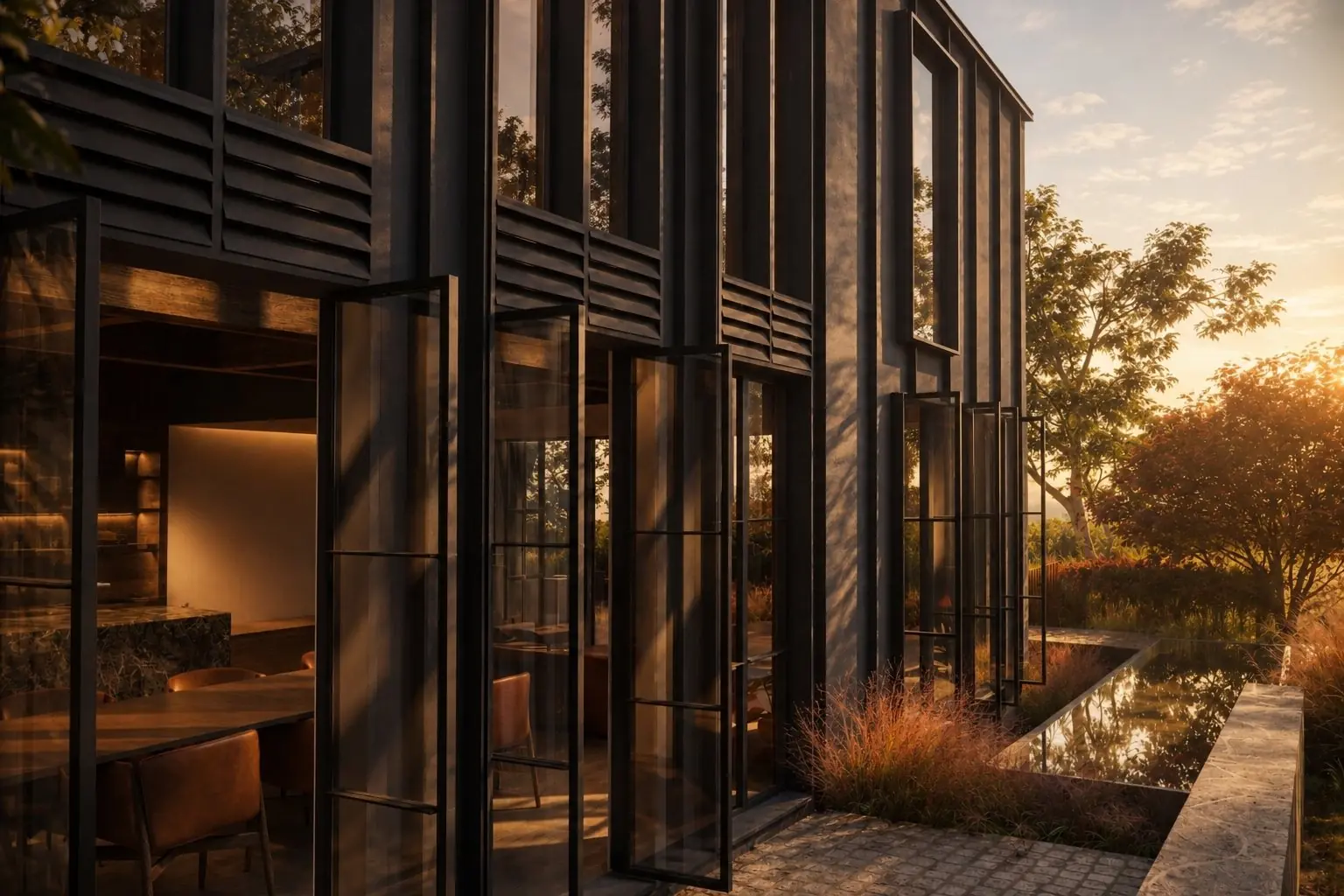
From the air barrier outwards, the wall is colder than the room’s dew point.
- plasterboard10 mm · R0.0619.5–19.6
- services cavity45 mm · R0.1819.0–19.5
- 1 · airtight layerairtight layerwarm side19.0°C · 19.0, seven degrees above the room’s dew point
- conventional
- no continuous layer, untested
- considered
- taped layer, tested at completion
- best available
- taped layer on the warm side, tested at pre-line and at completion
- 2 · insulationinsulation140 mm · R3.68.9–19.0°C · 19.0 to 8.9; the dew point falls 97 mm in
- conventional
- batts to the minimum, gaps at studs and corners
- considered
- thicker batts, fitted without gaps
- best available
- continuous insulation, thermal bridges designed out
- 3 · rigid air barrierrigid air barrier12 mm · R0.098.6–8.9°C · 8.6–8.9, below the dew point: room air must not reach it
- conventional
- building paper, lapped
- considered
- rigid air barrier, taped joints
- best available
- rigid air barrier, taped and tested with the house
- 4 · drained cavitydrained cavity20 mm · R0.158.2–8.6°C · 8.2–8.6 · drains and dries what gets past the cladding
- conventional
- cladding fixed direct where allowed
- considered
- 20 mm drained cavity
- best available
- drained and vented cavity, flashed at every opening
- weatherboard18 mm · R0.157.8–8.2
Four of these layers decide whether the wall stays dry.
Whether a wall stays dry is decided in the section drawing.
Why does the glass run with water on a winter morning?
The inside face of a window is usually the coldest thing in a room. Below the dew point of the room’s air, it runs with water.
Until 2022 the minimum for a new window in Auckland was R0.26: clear double glazing in an aluminium frame. Since November 2023 it has been R0.46.
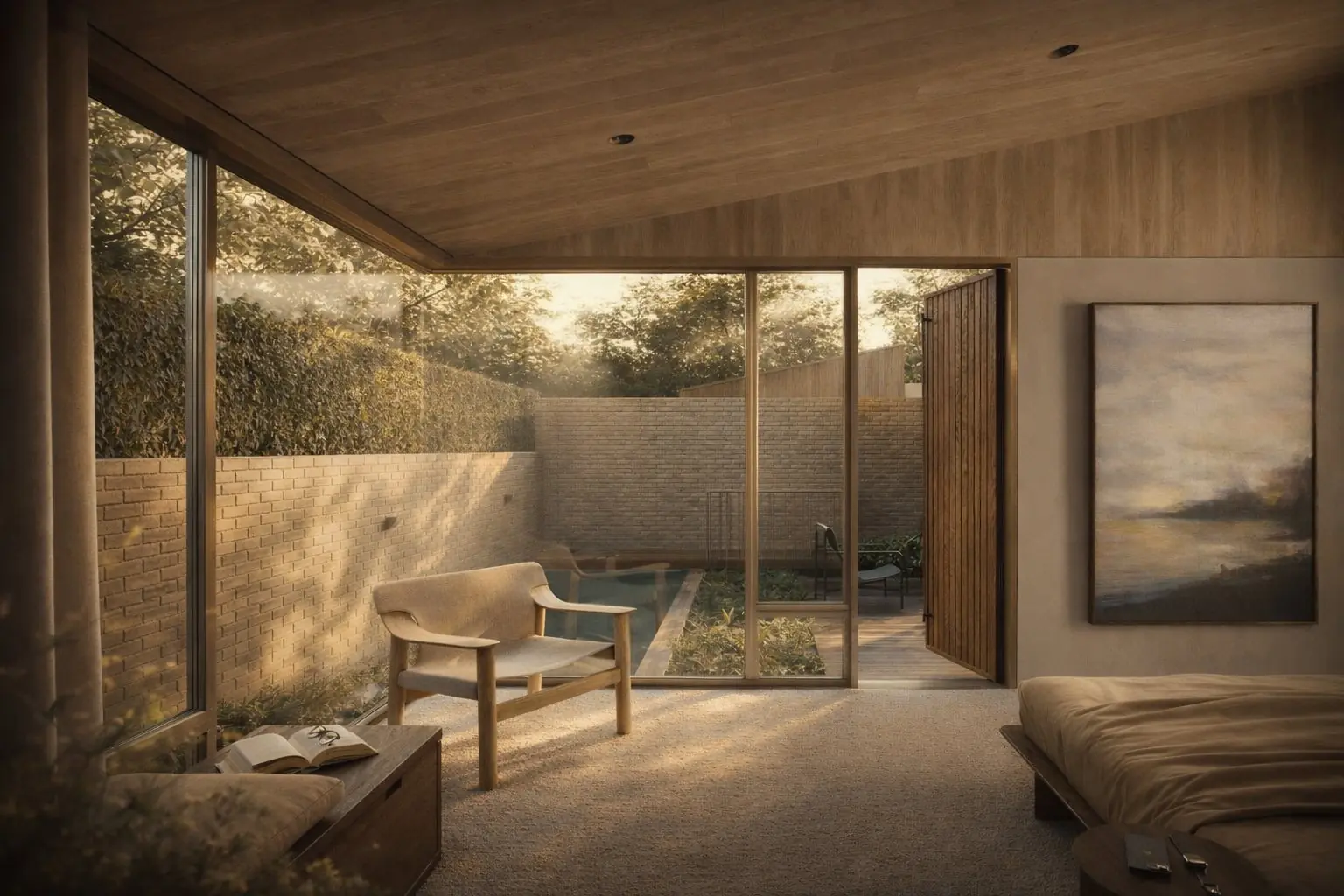
Single glazing runs with water above 50% humidity. Clear double glazing in aluminium follows above 68%.
- single glazing, aluminiumR0.15 · wet above 50%9.3
- clear double glazing, aluminiumR0.26 · wet above 68%13.8
- 1 · glasswindow at R0.46minimum since Nov 2023 · wet above 80%16.5°C · 16.5 on a July night at the R0.46 minimum
- conventional
- clear double glazing, R0.26
- considered
- double glazing at the R0.46 minimum
- best available
- glazing above the minimum, warm-edge spacers
- a wall at R2.0for comparison · wet above 95%19.2
- 2 · frameframeruns colder than the glassedges and frames run colder than the glass average
- conventional
- aluminium, no thermal break
- considered
- thermally broken aluminium
- best available
- timber frame, warm-edge spacers
- 3 · eaveeavenoon sunsun at noon · 76.6° on 21 Dec, 29.7° on 21 Jun
- conventional
- no eave, blinds added later
- considered
- eave sized for the midsummer sun
- best available
- eave or louvres set by a sun study at 21 Dec and 21 Jun
Three parts of this opening decide how it behaves in winter and in summer.
Whether a window runs with water is decided before it is ordered.